How We Work
People and Process First
We start with how your business runs and the people doing the work. The AI comes last, built into work that's already been mapped and fixed.
The people in your first meeting run the engagement, from AI Foundations to the workflows your team uses every day.
Book a Call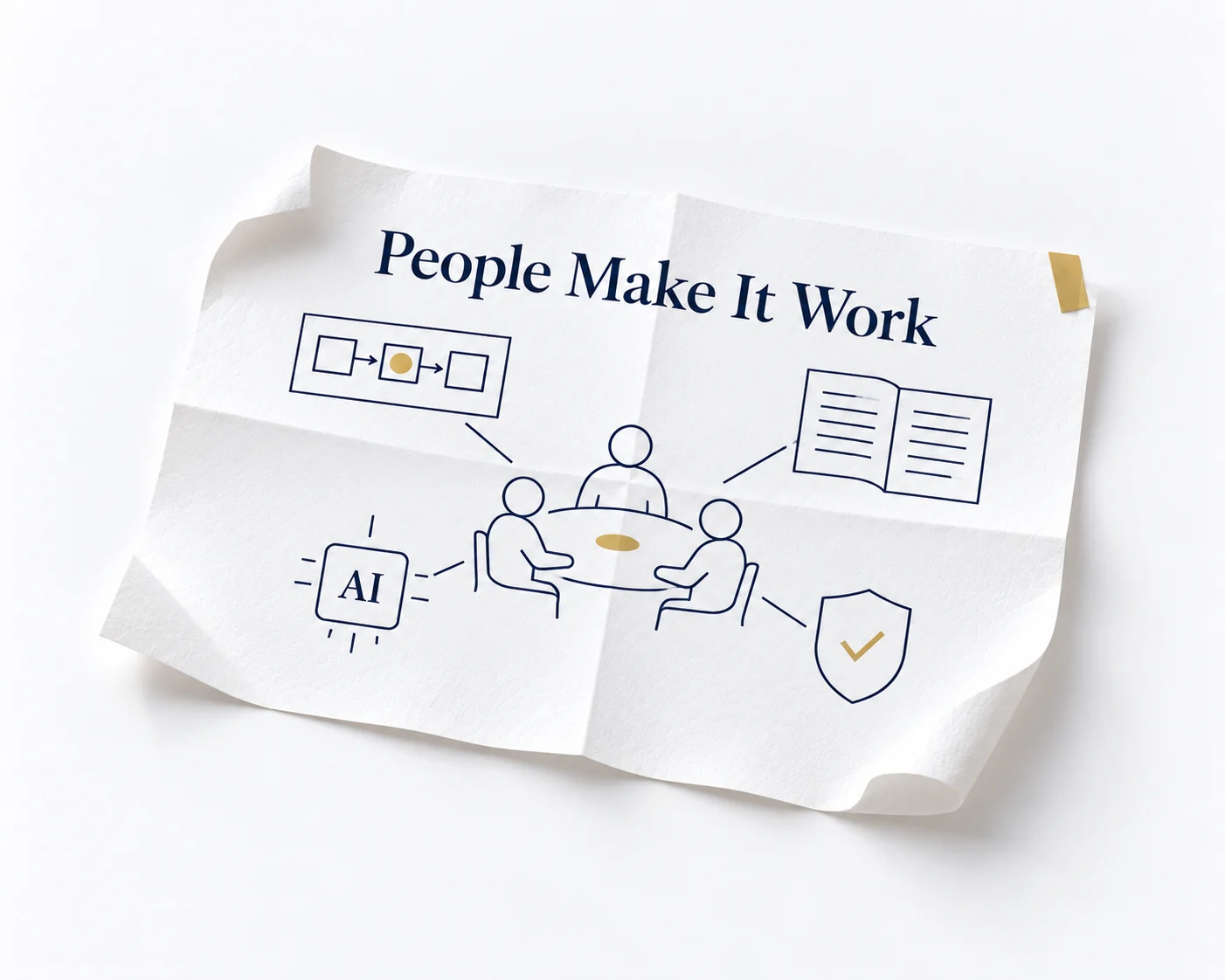
Our Approach
Four Parts, in This Order
Every engagement works through the same four parts, starting with the people doing the work and ending with the tools.
People Who Own the Work
We start with the people doing the work: where their time goes, what slows them down and who'll own each workflow once it's live. A person stays in charge of every output that matters.
A Process Fixed First
We map how the work gets done, including the handovers, approvals and exceptions. Then we fix the process before any AI goes in, using Lean Six Sigma where it helps.
Knowledge and Data in One Place
Pricing, procedures, client history and templates go into one company context the AI can read, held in your own systems. Your team's expertise is there for everyone who needs it.
Technology Chosen Last
Claude, ChatGPT or Microsoft Copilot, whichever fits your environment, connected to the systems you already run on. We build integrations when a workflow needs them.
If those foundations aren't there, it doesn't matter what technology goes on top.
The Engagement Path
From AI Foundations to Everyday Work
Most clients start with AI Foundations, then add implementation sprints one area of the business at a time. Each engagement has a fixed fee and an agreed scope, and you decide what comes next after each one.
AI Foundations
3 to 4 weeks
The entry engagement. We map how the business runs and get your first workflows into use, without a big programme.
- Your processes mapped into a roadmap
- An AI platform set up with your company's context
- A usage policy and a foundations workshop
Implementation Sprints
3 to 6 weeks each
Each sprint builds the workflows for one area of the business, following the roadmap and named for the outcome you want.
- Discovery and scope in week one
- Workflows built, tested and in daily use
- An owner on your side for each workflow
Ongoing Support
After go-live
Support while the workflows bed in, and someone to keep them current as your business and the AI tools change.
- 2 to 3 months of tuning after go-live
- Then optional managed AI services
- Your company context kept up to date
Inside Each Engagement
How Each Engagement Runs
Every engagement follows the same steps, from discovery in week one to a close-out review against the agreed scope.
Explore AI ImplementationDiscovery and Scope: week one
We map how the work is done with the people who do it, then confirm the workflows and the scope, so everyone knows what's being built.
Process: fixed before AI goes in
We take out the steps that don't need to be there and agree how the work should run. That gives a baseline to measure the change against.
Build: skills, context and connections
We write the skills, build the company context and connect the AI to the systems your team uses. A skill is everything the AI needs to do one task the way your business does it.
Test: with the people who'll use it
Your team tries each workflow on real work until it's right. We adjust it based on what they find, including the exceptions they handle every day.
Go Live: an owner for every workflow
The workflows go into daily use. Each one has an owner on your side, quality checks and a point where a person reviews the output before it's used.
Close-out: results against the scope
We review what was delivered against the agreed scope, then agree what comes next: another sprint, ongoing support or a pause.
In Their Words
I really like your methodology and your preparedness to call it how it is. You've not only added value in the immediate project area, but also in answering the inevitable question from the CEO or CFO: why aren't we using AI and how are we using it safely?
 Peter Jamieson, General Manager
Meet the Senior ELab Team
The Humans Behind Your AI
Operators who learn your business from the inside. The people in your first meeting do the work.
Meet the Senior Team



Practical Questions
Timing, Cost and Your Team's Part
Where do most clients start?
With AI Foundations. In 3 to 4 weeks you get your processes mapped into a roadmap, an AI platform set up with your company's context, a usage policy and your first workflows in use. A professional services operations sprint is a typical next step.
How long does an engagement take?
AI Foundations runs 3 to 4 weeks. Implementation sprints usually run 3 to 6 weeks each, one area of the business at a time, and you decide what comes next after each one.
How is the work priced?
Each engagement has a fixed fee, agreed before work starts. The fee depends on the workflows, the systems involved and the support you want after delivery.
How much of our team's time does it take?
The people doing the work show us how it runs during discovery and test each workflow before it goes live. We agree who's needed and when as part of the scope.
What happens after go-live?
That's your call. Some clients take ongoing support while the workflows bed in. Some move to managed AI services, where we maintain and extend the skills and company context. Others run the workflows themselves, with their owners in place.
A Good Place to Start
Bring the Work You Want to Improve
Thirty minutes on how your business runs and what you'd like to improve. No preparation or project brief needed.
Book a Call hello@elab.co.nz